
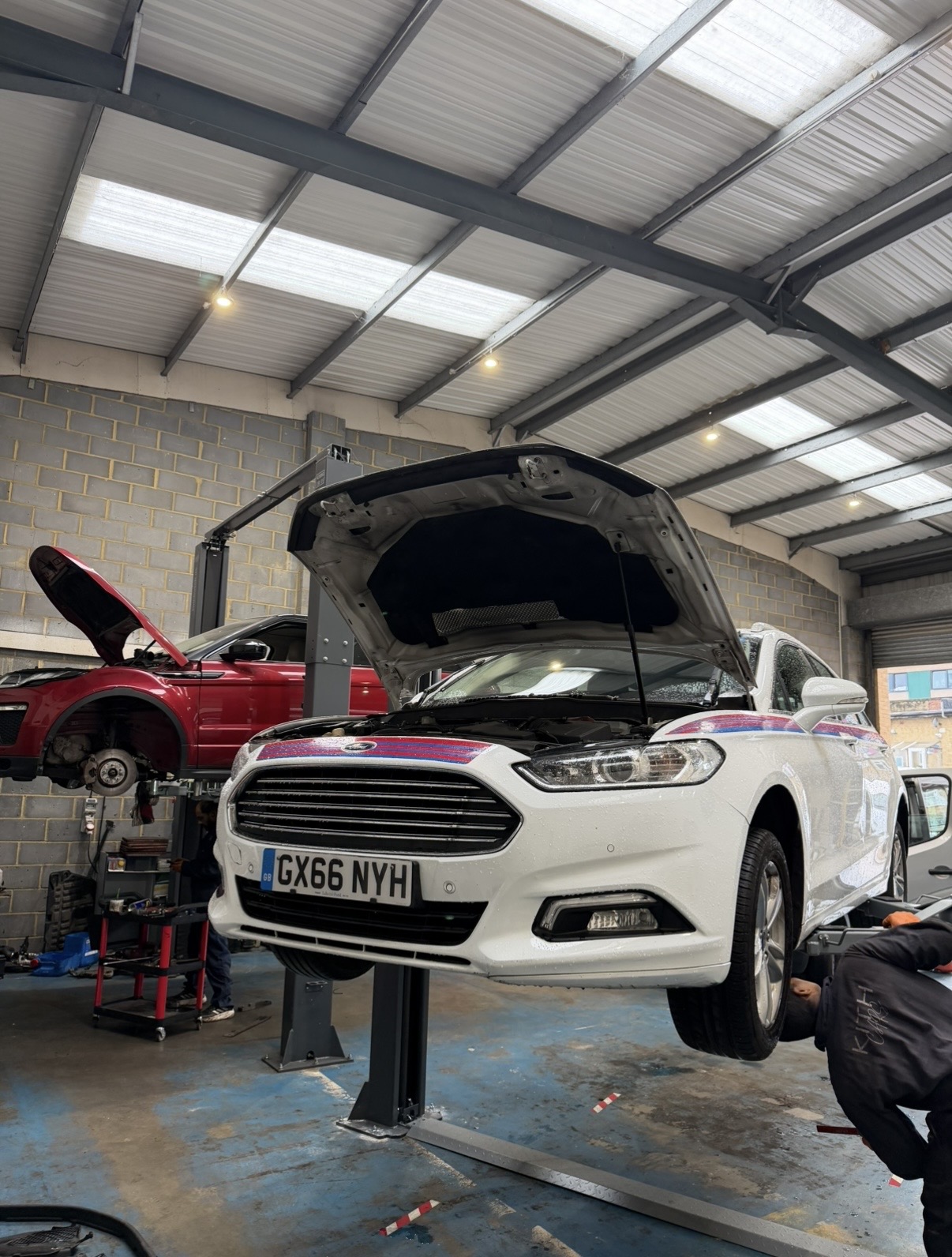
How we handle AdBlue system repair at Hackbridge
The scan tool is only the beginning. The fault memory tells you the module has noticed something; the live data tells you what. We look at the dosing quantity the ECU is requesting against what the system reports delivering, at the upstream and downstream NOx readings and whether the gap between them makes chemical sense, at tank level and temperature, and at the state of the quality sensor. On most makes we can then command a dosing test and a pressure build and watch the pump hold, or fail to.
Physical checks follow the data. The dosing module comes out and is examined properly, because a nozzle furred with hard urea deposits sprays a dribble instead of a mist, and the system reads that as poor efficiency. Urea dissolves in warm water, so a module that is only crystallised can sometimes be cleaned rather than replaced, and we will tell you when that is worth attempting and when the part is past it. The fluid itself is checked too. AdBlue drawn from an open drum, or watered down, will set a quality fault however sound the hardware is.
Then there is the part people do not expect: the drive. The SCR system runs its own monitors over a journey, and on many cars the warning and the countdown clear only once those monitors have completed and passed. That means a real road test, not a lap of the industrial estate and a code clear. Two things we will not do. We will not fit an emulator or load delete software; both leave a car on the road pretending to meet a standard it no longer meets. And on a high-mileage car facing a tank assembly, we will tell you what the part costs before you commit, because sometimes the honest answer is that the repair is worth more than the car.