Turbo Replacement for Purley and Woodcote Drivers

Purley has plenty of carefully kept diesels that cover very few miles a year, and those are the ones most likely to coke up an oil feed. We are about fifteen minutes north through Woodcote and we test before quoting.

  • ★★★★★ 4.9/5 from 193 Google reviews
  • ~15 min from Purley
  • Mon–Fri 8am–8pm · Sat 8am–5pm
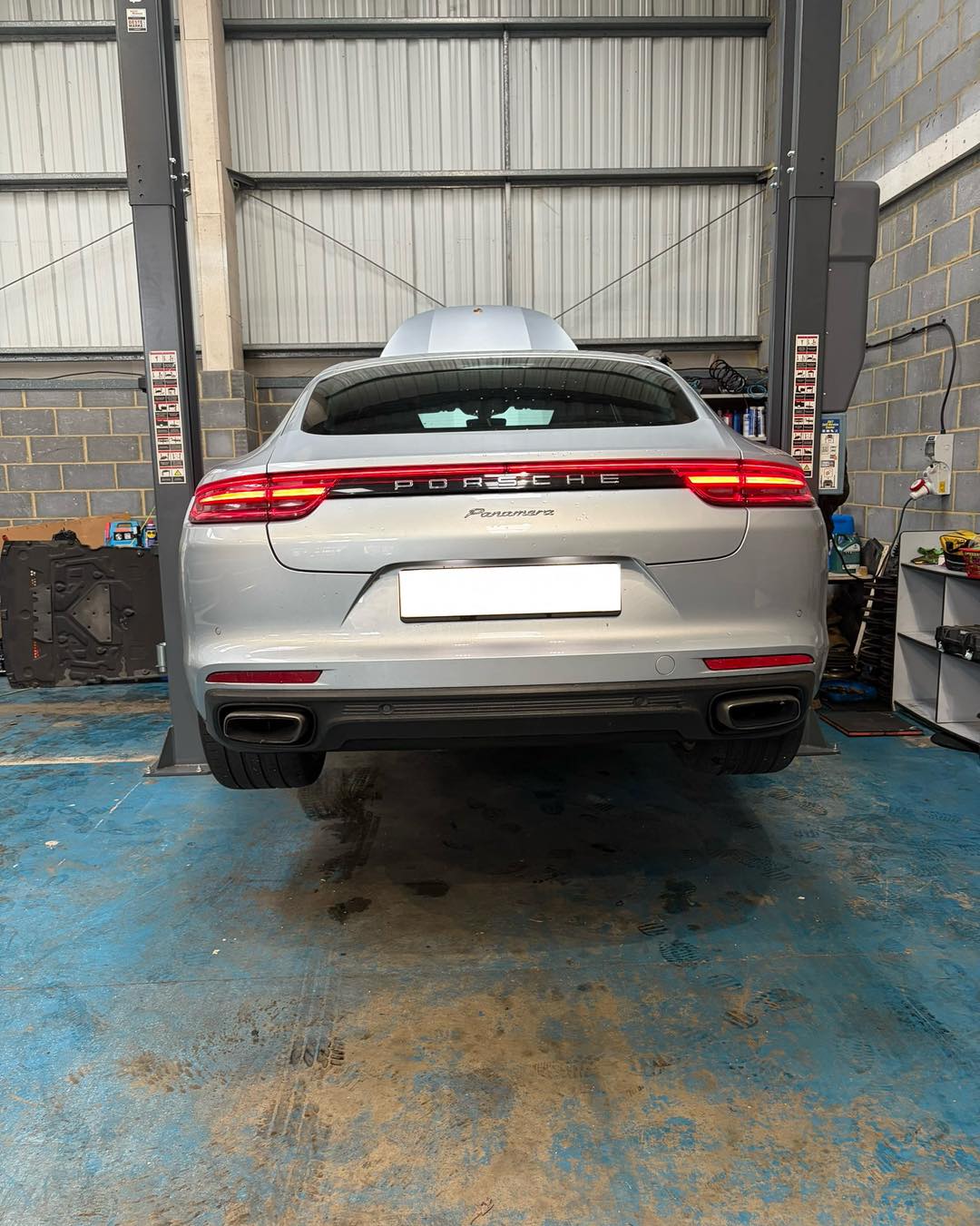
Inside the KITH workshop in Hackbridge at KITH Cars Garage & Bodyworks, Hackbridge

Low annual mileage is no protection for a turbocharger

Around Russell Hill and the Webb Estate there are a lot of cars that do modest annual mileage and are serviced on a time basis because they never reach the mileage trigger. People reasonably assume that means less wear. For a turbocharger it does not work that way. Short local journeys around Purley War Memorial Hospital and up the steep residential roads keep exhaust temperatures low, which lets carbon settle on the variable geometry vanes, and oil that sits in an engine for a year degrades whether the wheels turn or not.

The steep valley roads then expose it. Pulling away from the Purley Cross gyratory, where the A23, A22, A235 and A2022 all meet, or climbing out of the valley, asks for full boost from an engine whose vane mechanism is stiff. The ECU sees the gap between requested and actual boost and intervenes. Old Lodge Lane with its speed cushions and 20mph limit adds more low-load running. The result is a car that has barely been used yet behaves like one that has been thrashed.

Our testing is aimed at telling the difference between a fouled turbo and a worn one, because the answers cost very different amounts. A seized vane mechanism can sometimes be freed and cleaned, and many turbos have a separate electronic actuator that can be replaced and calibrated to the unit. Shaft play beyond the manufacturer's limit, or chipped compressor blades, means the bearings and balance are gone and no amount of cleaning will help.

When a replacement is right, the oil side gets the attention it deserves. The feed pipe is renewed rather than reused, the drain checked, the breather inspected and the oil and filter changed to the correct specification, because a restricted feed is the usual reason a second turbo follows the first. You get a written quote with new and remanufactured options, collection from Purley if the drive is not sensible, and a 3-month workmanship warranty.

Turbo Replacement: what’s involved

A turbocharger is driven by exhaust gas leaving the engine. That gas spins a turbine wheel which, through a shaft no thicker than a pencil, drives a compressor wheel on the other side, forcing in more air than the engine could ever draw on its own. Under load the shaft turns well beyond 150,000 rpm, carried on a film of engine oil only microns thick.

Boost is limited either by a wastegate that bleeds exhaust gas past the turbine, or, on most modern diesels, by variable geometry vanes that change the angle at which gas strikes the turbine wheel. An actuator moves them on command from the engine ECU, which constantly compares the boost it asked for against the figure the sensor reports back. That comparison is where honest diagnosis starts, because one underboost code can equally mean a dead turbo, a leaking pipe or a vane ring packed with carbon.

From £600Written quote first
4–8 hoursTypical time in the workshop
3 monthsWorkmanship warranty
4.9★193 Google reviews

Signs your turbo is failing

Power falls away as boost should build

The car pulls cleanly from low revs then flattens out or drops into limp mode partway up the rev range. Underboost fault codes normally sit behind it.

Siren whine that tracks the throttle

A healthy turbo makes a soft rush of air. A loud siren or aircraft-like howl rising and falling with load points to shaft play or damaged compressor blades.

Rattle or grinding under load

Metallic noise as boost comes in means a wheel is touching its housing. Keep driving and the blades break up, either into the engine or back through the catalyst.

Blue smoke when accelerating or on overrun

Oil passing the turbine or compressor seals burns blue. Worn valve stem seals give a similar colour on a cold start, so we look for oil in the intake pipework before blaming the turbo.

Oil inside the intercooler and boost pipes

Pulling a hose off and finding it wet inside is a strong sign, though a blocked crankcase breather can push the same oil mist through a perfectly good turbo.

Using oil with nothing on the drive

A car needing oil between services with no drips underneath is often losing it through the turbo seals and out of the exhaust.

Boost that hunts or surges

Vanes gummed with carbon, a split vacuum line or a tired actuator make boost swing about, and the ECU can log overboost faults as well as underboost ones.

Repeated particulate filter warnings

Oil getting past the seals loads a diesel particulate filter with ash that no regeneration can burn away, so blocked filter warnings often arrive alongside a failing turbo.

When does a turbo need replacing?

A turbocharger has no replacement interval and should in principle last the life of the engine. It normally fails because something else went wrong first. Oil is the usual culprit: a starved or contaminated supply, a feed pipe coked up with carbon, a stretched oil change interval or the wrong grade for the engine. After that comes damage from debris drawn through a split intake or a collapsing air filter, then overspeed on a badly mapped engine, and carbon seizing the vane mechanism on a car used only for short trips.

  • Oil and filter changed on time to the manufacturer's specification is the single biggest factor in turbo life
  • Air filter renewed at every service, with the intake ducting checked for splits
  • Diesels used mainly in town benefit from a regular longer run at steady motorway revs
  • Investigate underboost, overboost or limp mode as soon as it first appears
  • Have the oil feed line checked whenever a turbo is replaced or an engine has run hot

How we replace a turbo

  1. Confirm the fault on the roadWe drive the car logging requested against actual boost, air mass and exhaust back pressure, and note the exact point where the ECU intervenes.
  2. Look for the cheaper answers firstA smoke test exposes split intercooler hoses and cracked plastic elbows in seconds. We also check actuator travel, the boost sensor reading and whether a blocked particulate filter is choking the exhaust.
  3. Inspect the unit itselfWith the intake off we examine the compressor wheel for chipped blades and oil, measure radial and axial shaft play against the figures for that turbo, and check the turbine side for coking and free vane movement.
  4. Establish why it failedBefore quoting we look at oil condition and level, the feed and drain lines, the crankcase breather and the air filter housing. Skipping this question is how people end up buying two turbos.
  5. Written quote and optionsWe price a new OE-equivalent unit alongside a properly remanufactured one, explain the difference in warranty and build, and include the parts that must go with it rather than leaving them as extras.
  6. Remove and decontaminateThe turbo comes off with its manifold or downpipe fixings. We renew or prove the oil feed and drain lines, flush oil out of the intercooler and boost pipework, and inspect the catalyst or particulate filter for debris.
  7. Fit the replacementNew gaskets, nuts and studs go in wherever the originals have corroded, the bearing housing is primed with oil by hand so it is wet before first start, and a variable geometry actuator is calibrated to the new unit where the system needs it.
  8. Fresh oil and a careful first runNew oil and filter go in, the engine is cranked without firing where the design allows so pressure builds, then idled gently and watched for leaks and smoke rather than revved.
  9. Road test and rescanWe road test under full load, confirm actual boost now follows the requested figure, clear and recheck the codes, and force a regeneration if the particulate filter calls for one.

Turbochargers and parts we fit

We fit new turbochargers from the makers who supply the car industry, such as Garrett, BorgWarner, IHI and Mitsubishi, or a properly remanufactured unit rebuilt with new bearings and seals and balanced on a machine. Unbranded rebuilds are a false economy on a part spinning this fast. Every job includes a renewed or proven oil feed line, new gaskets and fixings, a fresh air filter, and oil and filter to your engine's specification.

  • New or remanufactured turbocharger matched to your engine code
  • Oil feed pipe and banjo bolts renewed rather than reused
  • Manifold, downpipe and oil drain gaskets with new nuts and studs
  • Fresh oil of the correct specification, with a new oil filter
  • New air filter, plus any split intake or boost hoses found
  • Electronic actuator calibration where the turbo uses one

How long it takes

4–8 hours

On many four-cylinder diesels the unit is reachable in half a day. Where it sits between the engine and the bulkhead, or the subframe has to come down, it becomes a full day or more, and seized manifold studs can add time nobody can predict precisely. Plan to leave the vehicle with us.

What’s included

  • Boost logging and actuator testing before any part is ordered
  • Smoke test of the intake and boost pipework
  • Shaft play measured against the manufacturer's limit
  • Turbocharger fitted with renewed oil feed and new gaskets
  • Oil, oil filter and air filter changed as part of the job
  • Road test, rescan and 3-month workmanship warranty

From Purley to our Hackbridge workshop

From Purley Cross head west up Foxley Lane (A2022) through Woodcote to the mini-roundabout with Woodcote Road and Smitham Bottom Lane (A237). Turn right onto Woodcote Road (A237) and follow the A237 north through Wallington as it becomes Manor Road and then London Road into Hackbridge; Soho Mills is on the right.

Foxley Lane west through Woodcote to the A237, then north through Wallington into Hackbridge, around fifteen minutes and 4.5 miles. If the car cannot pull away from the hills safely, we would rather recover it than have you try that route.

Directions from Purley

About Purley

Purley is a green, hilly suburb on the edge of the North Downs about three miles south of Croydon, which grew rapidly in the 1920s and 1930s as a place of spacious homes. Its small town centre sits in a valley around Purley Cross, where the A23, A22, A235 and A2022 all meet, while the surrounding roads climb up to detached and semi-detached houses in Woodcote, Russell Hill, Riddlesdown and the private Webb Estate. It feels quieter and more affluent than central Croydon, but the Purley Cross gyratory is a well-known bottleneck and many side roads are steep and winding.

Places nearby: Purley Cross, Purley station, Purley War Memorial Hospital, Webb Estate, Promenade de Verdun, Russell Hill school buildings

Postcodes: CR8 · London Borough of Croydon

More about KITH for Purley drivers

Turbo Replacement in Purley: your questions answered

The car has done 30,000 miles. How can the turbo already be failing?

Mileage is only part of the story. Low exhaust temperatures from short trips foul the vane mechanism, and oil degrades by time as well as distance, so a lightly used diesel can have both a sticky turbo and tired oil. We check which of those is the problem before anyone talks about a new unit.

Is it worth replacing the actuator rather than the whole turbo?

On many turbos yes, if the shaft is still within its play limits and the blades are undamaged. The actuator has to be calibrated to the unit afterwards, which is something we do as part of the work. Where the shaft has play, replacing the actuator just puts a new part on a worn turbo.

Can you collect the car from one of the steeper roads around Woodcote?

Yes. Give us the road and the nearest junction when you book. A car with no boost on a steep hill is awkward and sometimes unsafe to move, so collection or recovery is usually the better choice than attempting the drive.

Can a turbo be repaired rather than replaced?

Sometimes. A vane mechanism seized with carbon can occasionally be freed and cleaned, and on many turbos the electronic actuator is a separate part, although it has to be calibrated to the unit afterwards. Once the shaft has play or a blade is damaged, the balance and bearings are beyond saving and replacement is the only sound answer.

Will a new turbo cure my oil consumption?

Only if the turbo is where the oil is actually going. We check the intake tract, breather system and exhaust before deciding, because a blocked crankcase breather moves oil through the engine in much the same way and costs a fraction to put right.

Does a remap destroy turbos?

A sensible map kept inside the compressor's flow range does not. Chasing power beyond what the turbo was designed to deliver makes it spin faster and hotter than intended, which shortens bearing life and raises exhaust temperatures. If an existing map looks like part of the story, we will say so.

Will I need a new particulate filter or catalyst too?

Not automatically. We inspect the exhaust for debris and measure back pressure once the new turbo is on. A filter loaded with oil ash after a long-running seal leak often cannot be brought back by regeneration, and we show you the readings rather than guess.

How do I make the new one last?

Change the oil on time with the right specification, let the engine idle for half a minute after a hard run before switching off, and drive gently until the oil is warm. On a diesel used for short journeys, a regular longer run keeps the vane mechanism moving freely.

Price your turbo replacement now

Enter your reg and we’ll look up your car and price the job from our own labour rates and the book time for your model. Then book it in with a fixed written quote before any work starts.

  • Free, about 30 seconds, no sign-up
  • Parts, labour and VAT included
  • 3-month workmanship warranty
  • Collection from Purley can be arranged
“It’s rare to find a garage you can truly trust. Fair price, brilliant customer service.”Thinushan K. · ★★★★★ Google

Prefer to talk? Call 020 4629 9469 or WhatsApp us.

Loading instant quote…
Chat on WhatsApp