
Street-parked cars, kerbed alloys and old repairs
Parking shapes the used cars on offer around here. Controlled zones have been spreading across Streatham, spaces near the high road are at a premium, and many side streets are narrow Victorian and Edwardian terraces with cars parked on both sides. Every car in that environment gets parallel parked tight most days, so kerbed alloys, scuffed bumper corners and small repaired dents are close to universal. The question is never whether a Streatham car has been touched, it is whether anything serious was fixed badly.
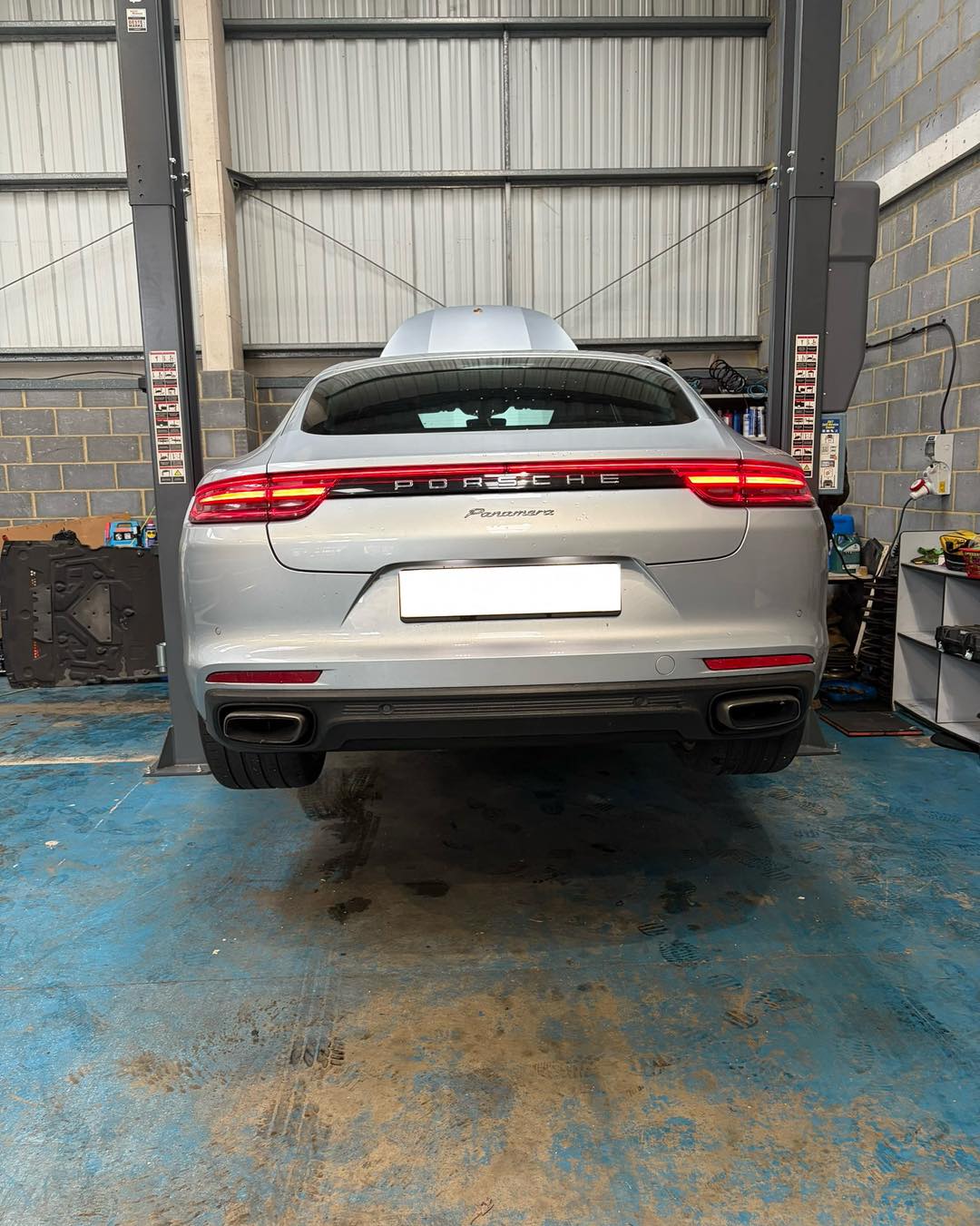
That is what the paint depth survey is for. We take readings panel by panel, and the pattern matters more than any single figure: a thick reading on one bumper corner is cosmetic, while thick readings running across a wing, a door and a sill suggest something that moved. We back that up with panel gaps, shut lines, fixings that have been disturbed, and a look on the ramp at inner wings, suspension turrets and subframe mountings for distortion or fresh underseal in one localised area.
The slow, short-journey life leaves mechanical traces too. Streatham High Road and Streatham Hill are bus-heavy red routes with a 20mph limit, so the mileage is low-speed and interrupted: brake discs corrode at the edges, handbrake mechanisms stiffen, tyres age out before they wear, and a diesel may never get hot enough to regenerate its particulate filter properly. We measure what can be measured and tell you clearly where a judgement is a judgement rather than a figure.
Getting the car here is the main hurdle, roughly 20 minutes down Mitcham Lane and Streatham Road, through Mitcham and south past Mitcham Junction. Most buyers either drive it themselves with the seller's agreement, or ask the seller to bring it. Local collection can sometimes be arranged where the seller confirms in writing that they are happy for the car to be moved. Either way, we need it on a ramp and we would rather have it cold.