Oil Leak Repair for Norbury and Pollards Hill

Norbury to Hackbridge is around 5.5 miles, about 18 minutes via Thornton Heath Pond and Mitcham Common. Wet weather makes an oil leak very hard to judge from your own driveway, and our diagnosis and repair work starts from £120.

  • ★★★★★ 4.9/5 from 193 Google reviews
  • ~18 min from Norbury
  • Mon–Fri 8am–8pm · Sat 8am–5pm
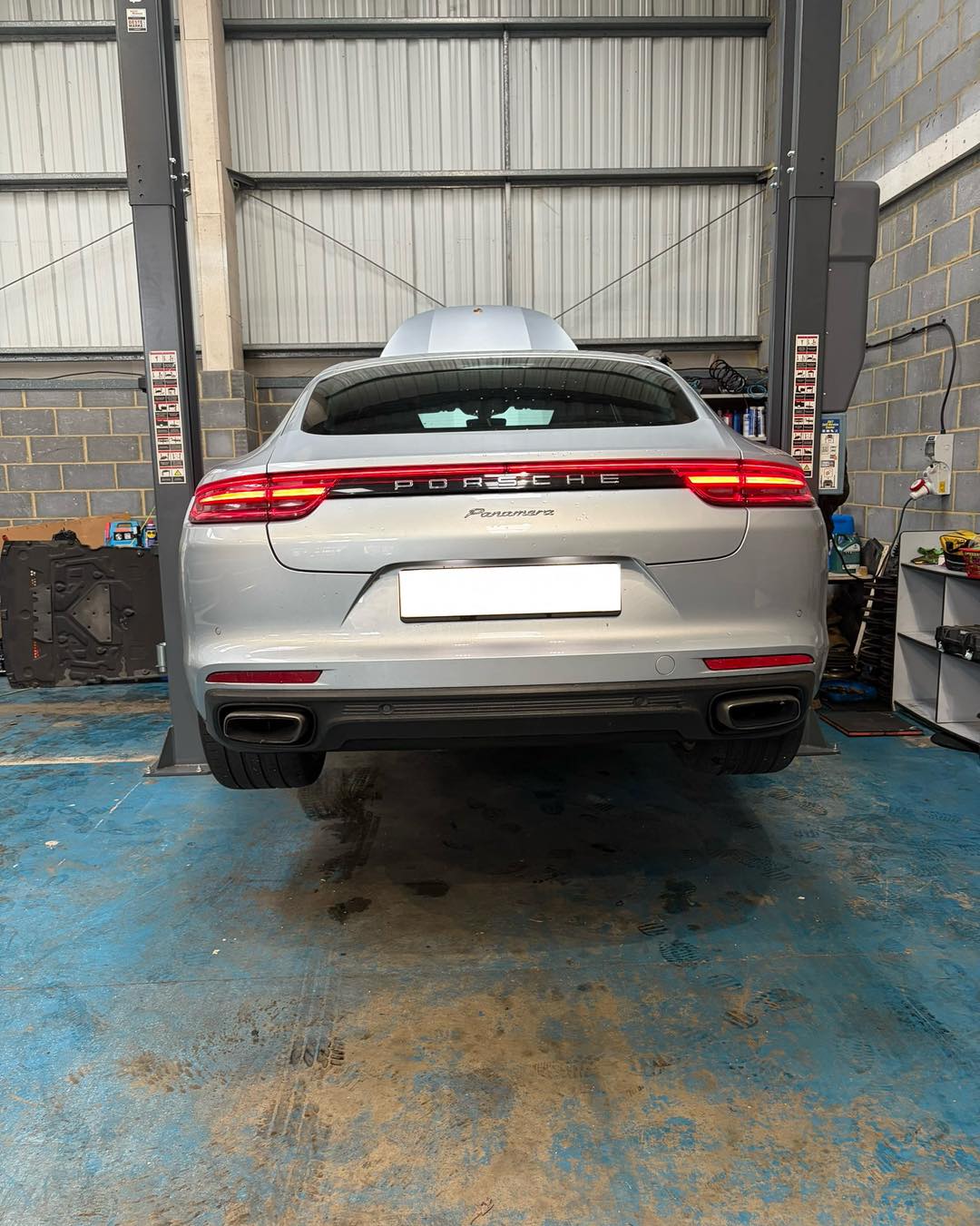
Inside the KITH workshop in Hackbridge at KITH Cars Garage & Bodyworks, Hackbridge

Rain, road drains and reading a leak in winter

Diagnosing a leak at home in a Norbury winter is close to impossible. Rain washes the evidence off the road within hours, the underside of the car is permanently wet anyway, and Norbury Brook rising quickly after heavy rain is a reminder of how much water the local drainage moves. Drivers quite often come to us convinced they have a serious leak when the dark wet film under the car is mostly road spray, and just as often with a real leak they have dismissed for the same reason.

Telling them apart takes two minutes on a ramp and a clean rag. Engine oil is amber to black, slippery and does not evaporate, and it attracts road dust into a gritty film that spreads wider the older the leak is. Water sits in beads and dries. What matters far more than the quantity is where it is going. Oil onto a cambelt, a clutch, an exhaust, an alternator or a rubber suspension bush has to be dealt with whatever the rate of loss, because of what it destroys.

After that it is method rather than opinion. The area is steam cleaned so no historic oil remains, measured dye goes into the sump, you carry on with your normal driving along the A23, Northborough Road and the roads around Norwood Grove for a few days, then an ultraviolet lamp shows the exact escape point. We check crankcase pressure in the same visit and give you written findings naming the source, with a price for that repair and a straight view of anything that can be left.

The way down is the A23 to the Pond, west as far as the Lombard roundabout, then out over Mitcham Common and south on the A237 to Hackbridge. If the level has dropped far enough that you are topping up to get anywhere, leave the car and ask about collection instead. We will give you an honest estimate of when we can reach you, and the repair itself carries our 3-month workmanship warranty.

Oil Leak Repair: what’s involved

Engine oil is held in by three different kinds of seal: static gaskets between fixed parts such as the sump and cam cover, rotating shaft seals at the ends of the crankshaft and camshafts, and O-rings around filter housings, coolers and sensors. All of them harden with heat and age, and all of them work against whatever pressure exists inside the crankcase.

That pressure matters more than most drivers expect. The breather system is meant to draw blow-by gas back into the intake and keep the crankcase slightly below atmospheric pressure. Block the breather or jam its valve and pressure builds until it finds the weakest seal, which is why a freshly fitted gasket can be pushed out within weeks if only the gasket was addressed. Oil also travels: airflow under a moving car carries it rearwards, so the wet area is rarely where it started.

From £120Written quote first
1–8 hoursTypical time in the workshop
3 monthsWorkmanship warranty
4.9★193 Google reviews

Signs you have an oil leak

Spots on the drive

Fresh engine oil is light amber and darkens with use, so a drip that starts pale and turns brown is usually engine oil. Where it lands says little on its own, since airflow moves it before it falls.

Burning smell after a drive

Oil falling onto a hot manifold or turbo burns off with a sharp smell, sometimes with smoke rising from under the bonnet while you sit at lights. On many cars that points at the cam cover.

Level dropping between services

Needing to add oil regularly with nothing obvious underneath can mean a leak burning off before it reaches the ground, or oil being consumed internally. Those two need separating before anything is replaced.

Gritty black film on the engine or subframe

Oil attracts road dust, so a leak of any age shows as a greasy coating rather than a clean wet patch. The older the leak, the wider the area it covers.

Oil warning light

A low level warning is a reason to stop and check the dipstick. A red oil pressure light is different and means stop immediately, because the engine is not being lubricated.

Smoke after the car has been standing

Oil that pooled on the undertray during a drive cooks off the next time the exhaust warms through, often a day later.

Oil near the timing cover

A leaking crankshaft or camshaft seal behind the cover soaks the cambelt, and rubber and oil do not mix. Anything wet in this area needs looking at promptly.

Clutch slipping on a high-mileage car

A failed rear crankshaft seal or gearbox input seal puts oil onto the friction plate, and the clutch starts to give way under load long before the friction material is worn out.

Seep or leak: when does it need fixing?

Not every damp gasket is a job. A seep leaves a surface oily but never forms a drop, and the dipstick stays where you left it. Plenty of engines past a hundred thousand miles live like that for years without trouble. It becomes a leak when oil drips, when you are topping up between services, or when it lands somewhere it must not: a cambelt, a clutch, an exhaust, an alternator or a rubber bush. Those cases need attention whatever the rate of loss looks like.

  • Check the oil level at least monthly and before any long journey
  • Any oil reaching a cambelt, clutch or exhaust needs fixing now, whatever the size
  • Topping up more than around half a litre between services is a leak, not consumption
  • Have a known seep re-inspected at every service to see whether it is getting worse
  • Renew crankshaft and camshaft seals while the timing belt is already off, not afterwards

How we find and fix an oil leak

  1. Go through the historyHow much oil you are adding, how often, what it smells like and when the spots appear all narrow the field before the car goes on the ramp.
  2. Check the oil itselfWe note the level, the grade in the engine and whether the oil has been diluted with fuel or contaminated with coolant, because that changes what we are dealing with.
  3. Degrease the areaThe engine and underside are steam cleaned so no old oil remains. Hunting a source through years of accumulated coating is guesswork.
  4. Dye and driveA measured dose of ultraviolet dye goes into the sump, then the car is run here or returned to you for a few days, so the leak shows itself under the conditions that normally cause it.
  5. Inspect under ultraviolet lightWith a UV lamp and filter glasses the dye glows at the exact point it escapes. An inspection camera reaches behind the timing cover and up the bellhousing where nothing else can see.
  6. Measure crankcase pressureWe test the breather and separator, because a blocked system pressurises the crankcase and forces oil past seals that are otherwise perfectly serviceable.
  7. Quote by sourceYou get a written price for the leak we have found and, where there is more than one, a straight opinion on which matters now and which can be left.
  8. Repair and resealMating faces are cleaned back to clean metal, new gaskets or seals fitted dry or with the specified sealant, and everything torqued to figure. Shaft seals are pressed in square with the correct drift rather than tapped home.
  9. Recheck after a runThe area is cleaned again, the car brought up to temperature and road tested, then put back on the ramp so we can confirm the repair is dry before handing it over.

Seals and gaskets we fit

Most leaks are cured with gaskets, seals and O-rings rather than large assemblies, and we use OE or OE-equivalent parts from suppliers such as Elring, Victor Reinz and Corteco. Crankshaft and camshaft seals are ordered against the manufacturer's part number, because lip design and spring tension vary between engines that otherwise look identical. Where a plastic filter housing or cam cover has warped or split, it is replaced rather than sealed. Oil is topped up with the correct Castrol grade for your engine.

  • Cam cover, sump and timing cover gaskets
  • Crankshaft front and rear seals and camshaft seals
  • Oil filter housing and oil cooler seals and O-rings
  • Sump plug with a new sealing washer
  • Breather, separator or valve where crankcase pressure is high
  • Manufacturer-specification oil to top up or refill

How long it takes

1–8 hours

A cam cover gasket or sump plug washer is often done while you wait. A sump gasket, filter housing or front crankshaft seal is roughly half a day. A rear crankshaft seal means taking the gearbox out and fills a day, which is why we usually quote it alongside a clutch if the clutch is anywhere near due.

What’s included

  • Steam clean of the suspect area before any inspection
  • Ultraviolet dye test and UV lamp inspection
  • Crankcase breather and pressure check
  • Written findings naming the source, with images if you want them
  • Gaskets, seals and manufacturer-specification oil to top up
  • Post-repair road test, re-clean and 3-month workmanship warranty

From Norbury to our Hackbridge workshop

Take London Road (A23) south to Thornton Heath Pond, then Thornton Road (A23) to the Lombard roundabout and turn onto Mitcham Road (A236) westbound. Stay on the A236 as it becomes Croydon Road across Mitcham Common, then turn left at the roundabout onto Carshalton Road (A237), which becomes London Road through Hackbridge; Soho Mills is on the left. A shorter but slower residential route runs via Northborough Road and Pollards Hill to Mitcham Common.

A23 to the Pond, west to the Lombard roundabout, out across Mitcham Common and then south on the A237, about 18 minutes from the station.

Directions from Norbury

About Norbury

Norbury is a largely residential suburb at the northern tip of the London Borough of Croydon, sharing the SW16 postcode with neighbouring Streatham; most of it lies in Croydon, with some parts on the Streatham side falling within Lambeth. It grew rapidly in the early 1900s, and its streets are mostly Edwardian and inter-war terraces and semis, including the London County Council's first cottage estate, with larger houses on the slopes of Pollards Hill. The A23 London Road forms the spine of the area and its main shopping strip, and it is often congested, while the side roads are quiet, 20mph and heavily parked. It is a family-orientated area with a busy, independent high street.

Places nearby: Norbury station, Norbury Park, Norbury Hall, Norwood Grove, Pollards Hill Park, Hermitage Bridge and Norbury Brook

Postcodes: SW16 · Mainly the London Borough of Croydon (Norbury and Pollards Hill, and Norbury Park wards), with some parts on its Streatham side extending into the London Borough of Lambeth

More about KITH for Norbury drivers

Oil Leak Repair in Norbury: your questions answered

The underside of my car is always wet. Is that oil or road water?

Both look similar in winter. Oil is slippery between the fingers, does not dry out and picks up road dust into a gritty film, while water beads and disappears. If you are not sure, we will put the car on a ramp and tell you in a couple of minutes at no great cost.

Does the rain make the leak harder to find?

At home, very much so, because it removes the evidence before you can look at it. In the workshop it makes no difference. We clean everything, add dye and inspect under ultraviolet light, so the weather stops being part of the picture.

The oil warning light came on. What should I do first?

Find out which light it is. A low level warning means stop somewhere safe, check the dipstick and top up with the correct grade before going any further. A red oil pressure light means stop the engine immediately and do not restart it, because the engine is not being lubricated and every further minute does damage.

Will a stop-leak additive work?

They work by swelling rubber, which can slow a small seep for a while. They do nothing for a hardened gasket, a warped housing or a scored shaft, and the swelling acts on every seal in the engine rather than only the one leaking. Finding the source and repairing it is the better use of the money.

Why clean the engine before diagnosing?

Because oil runs. A cam cover weeping at the back can coat the gearbox and look exactly like a bellhousing leak. Cleaning everything first, then running the car, means the only fresh oil we find has to be coming from the real source.

How can I tell engine oil from other fluids?

Engine oil is amber to black and feels slippery between the fingers. Coolant is bright pink, blue or green and smells sweet. Gearbox and power steering fluid are usually red and much thinner, and brake fluid is nearly clear. If you are unsure, slide a sheet of cardboard under the car overnight and bring it in with you.

Can an oil leak fail the MOT?

A leak bad enough to form drops can be recorded as a major defect for posing an environmental hazard, which is a fail. Oil on brake or steering components fails outright. A light seep with no drips normally passes, though the tester may record it as an advisory.

Can a small leak just be kept an eye on?

Often that is the sensible choice, particularly when the repair involves removing a gearbox or a timing cover. We note the exact source, mark the level and look again at your next service. If nothing has moved, nothing needs spending.

Price your oil leak repair now

Enter your reg and we’ll look up your car and price the job from our own labour rates and the book time for your model. Then book it in with a fixed written quote before any work starts.

  • Free, about 30 seconds, no sign-up
  • Parts, labour and VAT included
  • 3-month workmanship warranty
  • Collection from Norbury can be arranged
“It’s rare to find a garage you can truly trust. Fair price, brilliant customer service.”Thinushan K. · ★★★★★ Google

Prefer to talk? Call 020 4629 9469 or WhatsApp us.

Loading instant quote…
Chat on WhatsApp