Worcester Park ECU Remaps in Hackbridge

From Central Road to our Hackbridge workshop takes about 20 minutes via North Cheam, Cheam Village and Sutton. We treat every ECU remap as a proper workshop job, with a health check before the new map and a logged road test after it.

  • ★★★★★ 4.9/5 from 87 Google reviews
  • ~20 min from Worcester Park
  • Mon–Sat 8am–8pm
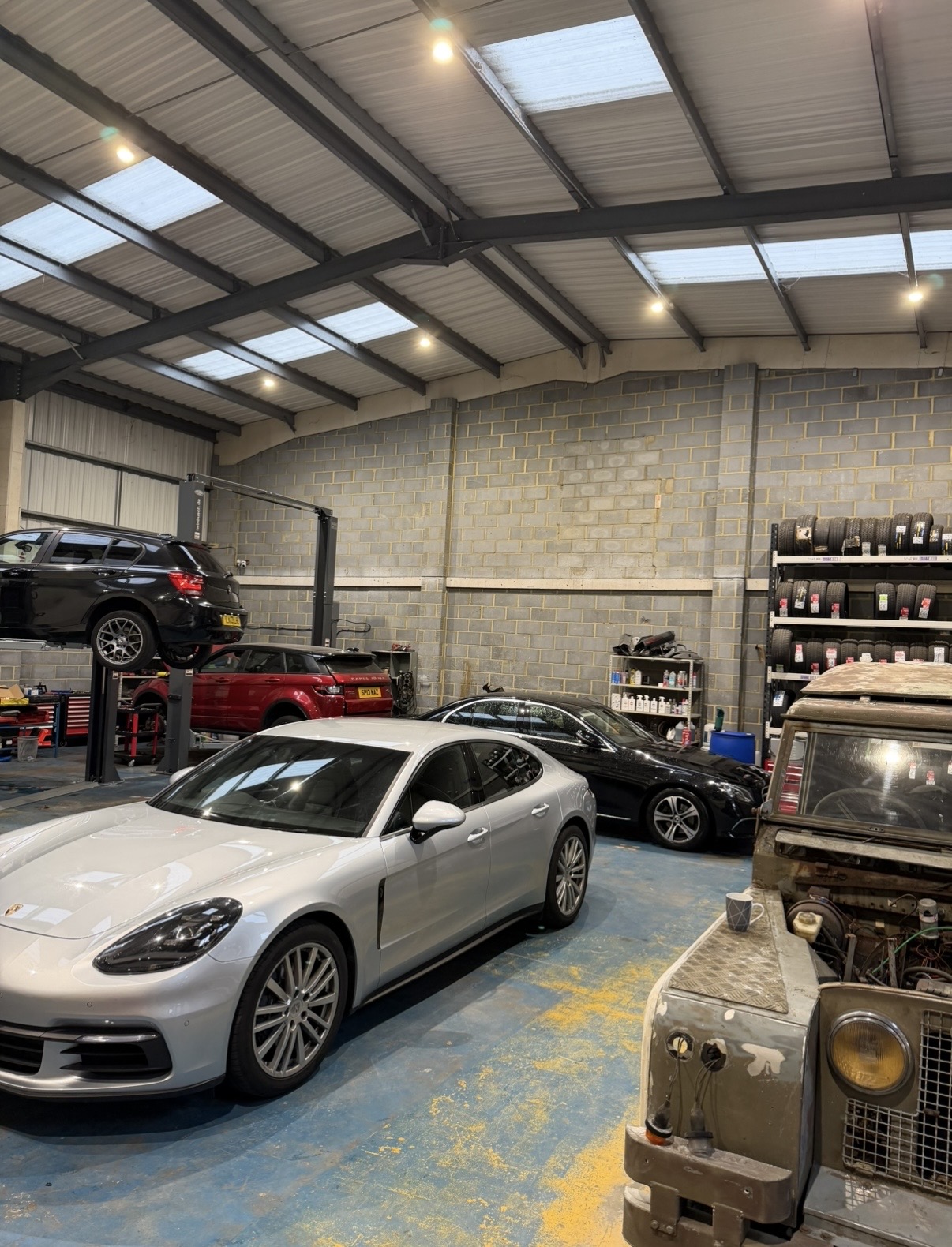
Porsche Panamera in the workshop at KITH Cars Garage & Bodyworks, Hackbridge

Central Road crawl to A24 cruise: the Worcester Park remap

Worcester Park's driving is mostly on long, wide residential roads, but everything funnels through Central Road, the single-carriageway high street that slows to a crawl with shop parking, bus stops and crossings, especially on Saturdays. Nobody needs more torque there. Where a remap earns its keep is on the A24 London Road and Stonecot Hill along the North Cheam border, and on the A240 towards the A3 at Tolworth, where a stronger mid-range makes joining faster traffic easier.

Many households run two cars, and the family car that goes to Cuddington Recreation Ground on a Saturday and down the A3 on holiday is usually the one worth considering. It's often a turbo diesel or petrol with a dual mass flywheel, and sometimes an automatic with its own torque limit. We check the clutch or gearbox, read live boost, fuel pressure and injector data, and scan all modules before quoting. If there's a fault, we quote to fix it first.

The ULEZ boundary runs through Worcester Park, with the Cuddington side in Surrey outside it and the Sutton side inside. A remap doesn't change which side of the rules your car falls on, as that depends on its Euro standard. We keep the DPF, EGR, catalyst and AdBlue fully working on every car, and we don't do deletes. On some diesels, gentle driving on longer runs, perhaps out past Hogsmill Open Space towards the A3, can bring a small economy gain, but we won't promise a figure.

The route to us is Cheam Common Road to the North Cheam crossroads, Malden Road to Cheam Village and the A232 east through Sutton to Carshalton, then Hackbridge Road north. It's about six miles. A remap usually takes two to four hours, you'll have a written quote first, and collection and delivery can be arranged if the round trip doesn't suit.

ECU Remapping: what’s involved

The engine control unit (ECU) decides how much fuel to inject, how much boost the turbo makes and when to ignite the mixture, using maps written by the manufacturer. Those maps are often set conservatively so one engine can suit different markets, fuel qualities and power ratings. A remap adjusts them within safe limits for boost, fuelling and timing to give more torque and a stronger mid-range, and on some diesels it can improve economy when driven gently.

A remap only works well on a healthy engine. Worn injectors, a boost leak, a slipping clutch or a tired dual mass flywheel will show up quickly once there is more torque going through them. That is why we check the car first and remap it within the limits of its drivetrain. A Stage 1 remap is software only on a standard car. Stage 2 goes further and relies on supporting hardware upgrades.

From £220Written quote first
2–4 hoursTypical time in the workshop
3 monthsWorkmanship warranty
4.9★87 Google reviews

Is a remap right for your car?

Turbocharged engine

Remapping delivers worthwhile gains on turbo petrol and diesel engines, where boost can be adjusted. Naturally aspirated engines gain very little.

Flat mid-range or towing

More low and mid-range torque makes overtaking easier and helps vans and cars that tow or carry heavy loads.

Engine in good health

The engine should be free of fault codes, boost leaks and misfires, with a clean service history. We check this before any software is written.

Clutch and flywheel up to the job

A clutch or dual mass flywheel already near the end of its life may slip or fail under extra torque. We check for slip and judder before remapping.

ECU that can be remapped

Some newer ECUs are locked or need to be removed and read on the bench. We confirm what is possible for your exact car before quoting.

Happy to tell your insurer

A remap is a modification and must be declared to your insurer. If you can't or won't declare it, a remap isn't right for you.

When should it be done?

The best time to remap is when the car is in good mechanical condition, freshly serviced and with no outstanding faults. If the clutch, dual mass flywheel or injectors are due for replacement, do that first, and consider an uprated clutch if the gain in torque is large. Check with your insurer before booking, and bear in mind that if the car is still under manufacturer warranty, a remap may affect claims on related parts.

  • After a service, with no fault codes or boost leaks present
  • When the clutch and dual mass flywheel are in good condition, or after replacing them
  • After confirming cover with your insurer
  • Stage 2 only once the supporting hardware is fitted

How we remap an ECU

  1. ConsultationWe discuss how you use the car and what you want from it, confirm the exact engine and ECU, and explain what gains are realistic and safe.
  2. Health checkWe scan all modules for faults and check live data for boost, fuel pressure, injector corrections and misfire counts, and check the clutch for slip.
  3. Fix any issues firstIf we find a fault that would make a remap unsafe, we quote to fix it first. We won't remap a car that isn't ready.
  4. Read and save the originalWe read the ECU through the diagnostic port, or on the bench where the ECU requires it, and keep a copy of the original software.
  5. Write the new mapThe adjusted map is written to the ECU with boost, fuelling, timing and torque limits set to suit the engine, gearbox and clutch. Emissions systems remain active.
  6. Data logging and road testWe road test the car while logging live data to confirm boost, fuelling and temperatures are within safe limits and there is no clutch slip.
  7. HandoverWe explain the changes and remind you to declare the remap to your insurer. The original software can be restored if you ever need it.

Software and supporting hardware

A Stage 1 remap needs no new parts, just a healthy engine. Stage 2 relies on hardware that lets the engine cope with more power, such as an uprated intercooler or intake. Any exhaust changes must keep the catalytic converter or DPF in place. Where the clutch is the limit, we can fit a new or uprated clutch and flywheel from reputable OE suppliers such as LuK or Sachs, depending on what is available for the car. We do not remove DPFs, EGR valves or AdBlue systems.

  • Stage 1: software only on a standard, healthy engine
  • Stage 2: supporting hardware such as an uprated intercooler or intake
  • Uprated clutch and flywheel where torque capacity is a concern
  • Original ECU software saved for reinstatement

How long it takes

2–4 hours

Most remaps, including the health check and road test, take two to four hours. Cars whose ECU must be removed and read on the bench, or that need faults fixed first, take longer.

What’s included

  • Pre-remap diagnostic health check
  • Clutch slip check
  • Backup of the original ECU software
  • Stage 1 or Stage 2 map suited to the car
  • Road test with live data logging
  • Original software restorable on request

From Worcester Park to our Hackbridge workshop

From Central Road head east along Cheam Common Road (A2043) to the North Cheam crossroads, go straight over the A24 onto Malden Road (A2043) and follow it to Cheam Village. Turn left onto the A232 through Sutton town centre to Carshalton, then take the B277 north via Hackbridge Road into Hackbridge and join London Road (A237) by Hackbridge station for Soho Mills.

Take Cheam Common Road east to the North Cheam crossroads, go straight over onto Malden Road to Cheam Village, then the A232 through Sutton to Carshalton and Hackbridge Road north to London Road, about 20 minutes.

Directions from Worcester Park

About Worcester Park

Worcester Park is a quiet, largely inter-war suburb about 10 miles south-west of central London, built up after the railway arrived and named after the 4th Earl of Worcester, keeper of Henry VIII's Great Park of Nonsuch from 1606. It sits across several council boundaries: most of it is in Sutton, the Cuddington side is in Surrey's Epsom and Ewell, and the station itself and part of Old Malden are in Kingston. Housing is mostly semi-detached family homes on long residential roads, focused on the half-mile Central Road shopping street. Driving is generally easy away from Central Road, though the single main road through the centre gets slow at peak times.

Places nearby: Central Road, Worcester Park station, Beverley Brook, Mayflower Park, Cuddington Recreation Ground, Hogsmill Open Space

Postcodes: KT4, SM3 · Mainly the London Borough of Sutton (Worcester Park North and Worcester Park South wards); the KT4 postcode district also takes in Cuddington in Epsom and Ewell (Surrey), part of Old Malden in the Royal Borough of Kingston upon Thames, and a small part of the London Borough of Merton

More about KITH for Worcester Park drivers

ECU Remapping in Worcester Park: your questions answered

I live on the Surrey side of Worcester Park. Does the ULEZ matter for a remap?

Not for the remap itself, as it doesn't change the car's emissions category. If you drive into London, the usual ULEZ rules apply whichever side you live on. We keep all emissions equipment working either way.

Which of my two cars is worth remapping?

Usually the turbocharged one that does longer journeys, as that's where you'll feel the extra mid-range. A car that mainly does short local trips rarely benefits. We're happy to talk through both at the consultation.

Is 20 minutes each way worth it for a remap?

Most remaps take two to four hours, so many customers either wait or use collection and delivery. We'll give you a written quote after the health check so you know exactly what's involved before committing.

Do I need to tell my insurer?

Yes. A remap is a modification that changes the car's performance and must be declared. If it isn't, your insurer may refuse to pay out after a claim. It's worth getting a quote from your insurer before you book.

What is the difference between Stage 1 and Stage 2?

Stage 1 is a software change on a standard car with no hardware changes. Stage 2 raises the limits further but depends on supporting upgrades, such as a better intercooler or intake, and usually a clutch able to take the extra torque. Any exhaust upgrades must keep the emissions equipment in place.

Will a remap damage my clutch or flywheel?

A good map keeps torque within what the drivetrain can handle, but every clutch and dual mass flywheel has a limit. If yours is already worn, extra torque will find it. That's why we check for slip first and may recommend an uprated clutch.

Can you remove the DPF, EGR or AdBlue while you're at it?

No. Removing or disabling emissions equipment is illegal for road use, can fail the MOT and can invalidate your insurance. Our remaps leave the DPF, EGR and AdBlue systems fully working.

Can the remap be reversed?

Yes, in most cases. We save your original software before writing the new map, so it can be restored later, for example before selling the car. A dealer may still be able to see that the ECU has been reprogrammed.

Price your ECU remap now

Enter your reg and we’ll look up your car and price the job from our own labour rates and the book time for your model. Then book it in with a fixed written quote before any work starts.

  • Free, about 30 seconds, no sign-up
  • Parts, labour and VAT included
  • 3-month workmanship warranty
  • Collection from Worcester Park can be arranged
“It’s rare to find a garage you can truly trust. Fair price, brilliant customer service.”Thinushan K. · ★★★★★ Google

Prefer to talk? Call 020 4629 9469 or WhatsApp us.

Loading instant quote…
Chat on WhatsApp