Wheel Alignment for Tooting Drivers

Tooting cars are parked tight, driven slowly and kerbed often, which is why uneven tyre wear turns up here on cars that have barely covered any mileage. Our Hackbridge workshop is about 18 minutes away via Mitcham, five miles by road.

  • ★★★★★ 4.9/5 from 193 Google reviews
  • ~18 min from Tooting
  • Mon–Fri 8am–8pm · Sat 8am–5pm
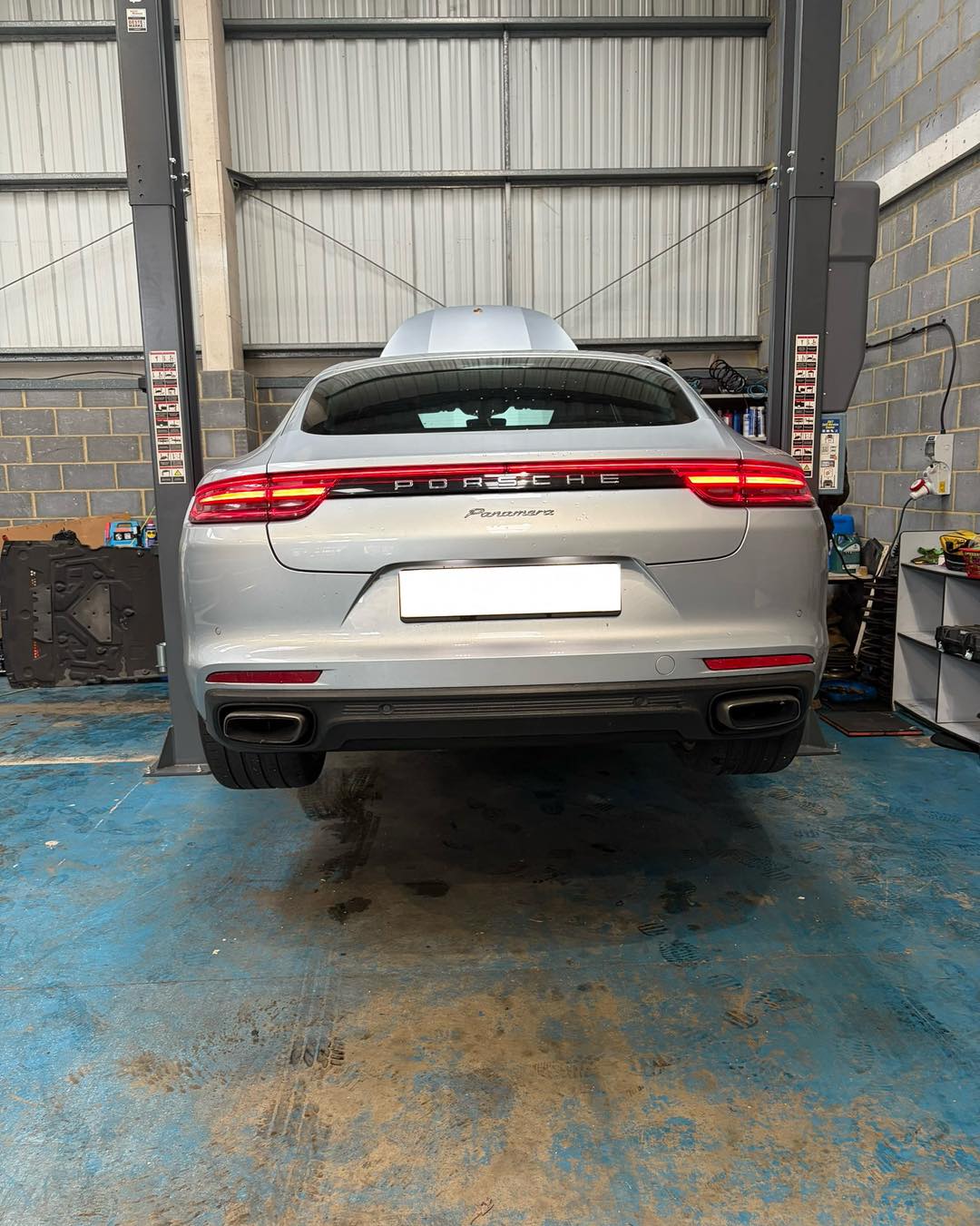
Inside the KITH workshop in Hackbridge at KITH Cars Garage & Bodyworks, Hackbridge

Low mileage, tight parking and tyres worn on one edge

Wandsworth has a 20mph limit on its residential streets and most of its other roads, and Upper Tooting Road and Tooting Bec Road were cut to 20mph as well, so Tooting driving happens at walking pace much of the time. The side streets are mostly narrow Victorian terraces parked on both sides, including the Totterdown Fields estate, and Garratt Lane heads north-west through Summerstown with a constant flow of traffic. Nothing about that is fast, but almost all of it involves manoeuvring within inches of a kerb.

The result is a pattern we see repeatedly on cars from SW17: low annual mileage, excellent-looking tread across most of the tyre, and one shoulder worn right down. A kerb strike on full lock does not need speed to move a steering angle, and because the car is never driven at a constant 50mph on an open road, the driver never feels the pull that would otherwise give it away. The wear is usually found by someone else, often at MOT time or when a tyre is changed.

Parking turnover adds to it. Controlled zones around Tooting Broadway and the eight-hour bays near St George's Hospital mean plenty of cars are moved and re-parked daily, and the junction where the A24 meets the A217 at the Broadway is congested with buses and pedestrians for most of the day. We take the registration, pull up the manufacturer's targets, measure toe, camber, caster and thrust angle and print the starting figures, so you can see whether the wear is geometry or simply a chronically under-inflated tyre.

Getting here means Mitcham Road east through Mitcham and the Figges Marsh signals, round to the Cricket Green, then Cranmer Road and Carshalton Road south past Mitcham Junction into Hackbridge, about 18 minutes. Given the distance, most people leave the car for the morning. A written quote comes before any part is fitted, and work carries our three-month workmanship guarantee.

Wheel Alignment: what’s involved

Wheel alignment describes the angles at which the wheels sit in relation to each other and to the road. Toe is whether a pair of wheels points inwards or outwards seen from above, the angle that most affects tyre wear. Camber is the inward or outward lean of the wheel seen from the front, and it decides how flat the tread sits under cornering load. Caster is the backward tilt of the steering axis seen from the side, which gives the steering its self-centring and straight-line stability.

On a four-wheel measurement the rear axle is read as well. The thrust angle is the direction the rear axle actually points relative to the car's centreline, and if it is out the car tracks slightly sideways with the steering wheel crooked even when front toe is perfect. Setting the front wheels to the thrust line rather than to the geometric centre is what puts the wheel straight and keeps it there. Manufacturers publish a target for each angle with a tolerance either side, and those are the figures we work to.

From £59Written quote first
60–90 minutesTypical time in the workshop
3 monthsWorkmanship warranty
4.9★193 Google reviews

Signs your alignment needs checking

Steering wheel sits crooked

The car goes straight but the spokes are at an angle. That is usually front toe set on the wrong reference, or a rear thrust angle that has never been measured.

Pulling to one side

On a flat, level road with a light grip the car drifts left or right. Unequal camber or caster is a common cause, though a dragging brake or a faulty tyre can do the same and has to be ruled out.

Feathered tread blocks

Run your palm across the tread: if the blocks feel sharp in one direction and smooth in the other, the toe setting is scrubbing the tyre sideways as it rolls.

One shoulder worn away

The inner or outer edge is down to the wear bars while the rest of the tread looks healthy. That pattern points to a camber or toe error rather than pressures.

Scrubbing or squeal on slow turns

A rubbing noise from the front when manoeuvring at walking pace can mean the wheels are fighting each other through the turn.

After a kerb strike or pothole

A hard hit can shift a track rod, bend a steering arm or move a subframe. The car may still feel normal while the tyre quietly wears out.

Steering slow to straighten

Coming out of a roundabout the wheel does not want to return on its own. Reduced caster or a binding top mount will both do this.

New tyres wearing quickly

If a fresh set loses noticeable tread within a few thousand miles, the geometry is almost always the reason rather than the tyres.

When should alignment be checked?

Have the angles checked whenever the suspension or steering has been disturbed, which means after replacing shock absorbers, springs, control arms, track rod ends or a steering rack, and after any accident repair involving the front end. A solid kerb impact or a deep pothole is worth a check even if nothing feels different. Beyond that, a check once a year, or with every new set of tyres, catches slow drift caused by settling springs and ageing bushes before it costs you rubber.

  • After any steering or suspension component is replaced
  • After a kerb strike, pothole impact or front-end accident repair
  • Once a year, or roughly every 10,000–12,000 miles
  • When fitting a new set of tyres, if the old ones wore unevenly
  • After lowering springs or a coilover kit are fitted

How we align a car

  1. Road test and check-inWe drive the car to feel where it pulls and where the steering wheel sits, and we ask what you have noticed. Any recent impact or repair work is noted.
  2. Wear and pressure checkThe car goes on the ramp and we check for play in the track rod ends, ball joints, wheel bearings and bushes, and look for damaged or mismatched tyres. Anything loose is quoted first, because an angle set on a worn joint will not stay set.
  3. Set up on the alignment gearTargets are clamped to all four wheels and the car is rolled through a compensation routine so the equipment ignores any small buckle in a rim.
  4. Measure and recordWe take the readings for toe, camber, caster and thrust angle, compare them with the manufacturer's data for your registration and print the starting figures.
  5. Explain what is adjustableWe show you which angles are out and which of them your car actually allows us to move. Where a correction needs an eccentric bolt kit or a camber bolt, we quote it before fitting anything.
  6. Adjust to specificationLock nuts are released, seized threads are freed with heat and penetrant where needed, and each adjustable angle is brought into tolerance with the steering rack held centred.
  7. Centre and tightenThe steering wheel is set straight with the rack in the middle of its travel, then every lock nut and clamp is torqued and the gaiters checked for twist.
  8. Reset and retestOn cars with stability control we carry out a steering angle sensor reset, then re-measure and print the finished figures.
  9. Road test and handoverA second drive confirms the car tracks straight and the wheel sits level. You keep the before and after printout.

Parts and adjusters

Most alignments need no parts at all, only time and careful adjustment. Where a thread has corroded solid, or a gaiter tears as the track rod turns, we quote the replacement before going further. Some cars need an adjuster kit to bring camber back into range, and we use OE or OE-equivalent components from established suspension suppliers such as Febi or Lemförder rather than unbranded parts.

  • Track rod ends and inner rack ends where threads are seized or worn
  • Steering rack gaiters and clips
  • Eccentric camber bolts and adjuster kits where the design allows
  • New lock nuts and clamp bolts
  • Subframe alignment where bolts have been disturbed

How long it takes

60–90 minutes

A four-wheel measurement and adjustment usually takes an hour to an hour and a half. Corroded adjusters, cars with rear toe and camber to set, and anything needing a parts change will take longer. Most jobs are done while you wait or over a morning.

What’s included

  • Pre-alignment inspection of steering and suspension joints
  • Tyre pressures set to the placard before measuring
  • Four-wheel measurement of toe, camber, caster and thrust angle
  • Adjustment of every angle the vehicle allows to be adjusted
  • Steering wheel centred and fixings torqued
  • Printed before and after readings to keep

From Tooting to our Hackbridge workshop

From Tooting Broadway take Mitcham Road (A217) east past Tooting station; it becomes London Road into Mitcham, through the signalised Figges Marsh junction and around the town centre one-way system to the Cricket Green. Take Cranmer Road (A239) to Carshalton Road (A237) and head south past Mitcham Junction; past Beddington Corner it becomes London Road into Hackbridge, where Soho Mills is near Hackbridge station.

From Tooting Broadway take Mitcham Road east into Mitcham, through the Figges Marsh signals to the Cricket Green, then Cranmer Road and Carshalton Road south past Mitcham Junction into Hackbridge. About 18 minutes.

Directions from Tooting

About Tooting

Tooting is a lively, densely built district of south-west London centred on Tooting Broadway and Tooting Bec, two Northern line stations at the bottom and top of the hill. Its streets are mostly Victorian and Edwardian terraces, including the Totterdown Fields estate, the first London County Council cottage estate, with larger houses towards Tooting Bec Common and Furzedown. It has a celebrated food scene along Upper Tooting Road and two indoor markets, and a big workforce at St George's Hospital. Driving is busy and slow on the main roads, with narrow, heavily parked side streets.

Places nearby: St George's Hospital, Tooting Bec Lido, Tooting Commons, Granada Tooting, Broadway Market, Tooting Market

Postcodes: SW17 · London Borough of Wandsworth

More about KITH for Tooting drivers

Wheel Alignment in Tooting: your questions answered

Tight parking round Totterdown Fields keeps kerbing my wheels. Does every knock need checking?

No. A gentle touch at a few miles an hour with the wheels straight is unlikely to move anything. What matters is a firm hit, especially on full lock or at an angle, or any impact that leaves the steering wheel sitting differently. Those are worth measuring, and the figures settle it either way.

My car does barely 3,000 miles a year. Why has one tyre worn on the edge?

Because toe and camber errors scrub rubber by distance, not by time, and they do it whatever speed you travel at. A car doing short, slow journeys simply takes longer to show the same pattern, and it never goes fast enough for you to notice the pull. Low mileage delays the symptom rather than preventing it.

Can you do alignment and an MOT in the same visit from Tooting?

Yes, and from 18 minutes away that makes sense. Book both together and the car is with us for the morning rather than making two trips. If uneven tyre wear is the reason you are coming, we will measure the angles first so you know whether the tyres need replacing before the test.

What is the difference between tracking and four-wheel alignment?

Tracking measures and sets only the front toe, and assumes the rear axle is pointing exactly where the factory intended. Four-wheel alignment measures the rear as well, works out the thrust angle, and sets the front to that line. If the rear has never been checked, tracking alone can leave the steering wheel off centre.

My steering wheel vibrates at motorway speed. Will alignment cure it?

Almost certainly not. A shake that comes in at a particular speed is normally a balance problem, a buckled rim or a distorted tyre, and it is fixed on a balancer rather than an alignment rig. Alignment faults show up as pulling, crooked steering and uneven wear instead of vibration.

Can every angle be adjusted on my car?

No. Many modern cars are only designed to allow front toe adjustment, with camber and caster built into the strut and subframe. Rear toe and camber are adjustable on most multi-link rear ends but not on a simple torsion beam. Where an angle is out and cannot be moved, the cause is usually a bent or displaced component, and we will say so rather than dial the other angles around it.

Does anything need resetting afterwards?

On cars with stability control the steering angle sensor learns where straight ahead is, so it needs a reset once the wheel position changes. Vehicles with a forward-facing camera for lane keeping may also need that camera recalibrated if the thrust angle has moved significantly. We tell you before the job whether your car is likely to need it.

Will alignment fix tyres that are already worn unevenly?

It stops the wear getting worse, but rubber does not grow back. A tyre with a worn inner shoulder stays worn, and if the cords are showing or the tread is below the legal limit on part of the tyre it still has to be replaced. Correcting the angles first means the replacement wears evenly.

Price your wheel alignment now

Enter your reg and we’ll look up your car and price the job from our own labour rates and the book time for your model. Then book it in with a fixed written quote before any work starts.

  • Free, about 30 seconds, no sign-up
  • Parts, labour and VAT included
  • 3-month workmanship warranty
  • Collection from Tooting can be arranged
“It’s rare to find a garage you can truly trust. Fair price, brilliant customer service.”Thinushan K. · ★★★★★ Google

Prefer to talk? Call 020 4629 9469 or WhatsApp us.

Loading instant quote…
Chat on WhatsApp