Head Gasket Replacement near Cheam and North Cheam

Cheam cars spend a lot of time stationary on the A232 and at the North Cheam crossroads, which is where a tired cooling system finally gives up. We are twelve minutes away and we test before we touch anything.

  • ★★★★★ 4.9/5 from 193 Google reviews
  • ~12 min from Cheam
  • Mon–Fri 8am–8pm · Sat 8am–5pm
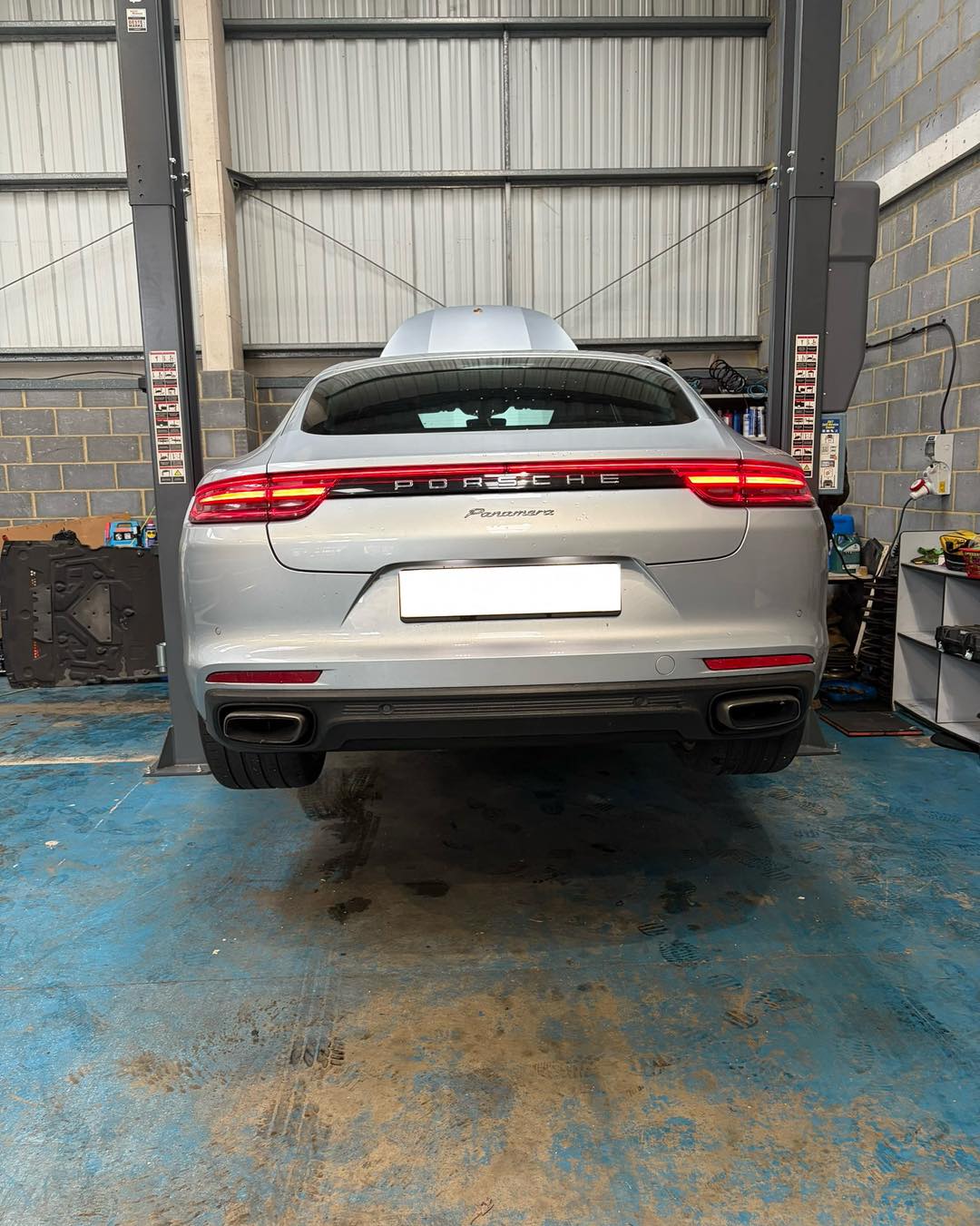
Inside the KITH workshop in Hackbridge at KITH Cars Garage & Bodyworks, Hackbridge

Standing still on the A232 is where the damage happens

The A232 through Cheam Village and on into Sutton is designated traffic-sensitive all week, and any lane closure turns it into a car park. Add the crossroads where Cheam Road meets The Broadway, and the North Cheam junction with its supermarket and drive-through traffic, and a lot of local mileage is covered at a standstill. Engines do not overheat because they are working hard. They overheat because they are not moving and something in the cooling system is no longer doing its job.

The cars themselves tend to be well looked after family machines, often a second vehicle used for the run to Cheam Leisure Centre or dropping children near Nonsuch High School. That use pattern means short journeys, many of them, and years of them. Coolant that has never been renewed loses its corrosion protection, and the first symptom is often nothing more dramatic than needing to top the expansion tank up between services. Coolant going somewhere with no puddle underneath is worth investigating properly rather than topping up again.

When a car comes in from Cheam with those symptoms, we start by proving or disproving the gasket. A chemical test draws air from the expansion tank through a fluid that changes colour in the presence of combustion gas. Compression and leak-down figures tell us whether two neighbouring cylinders have lost their seal. A borescope through the plug holes shows whether coolant has been washing a piston crown clean. That costs a fraction of a strip down and it either confirms the job or saves you the money.

If it is confirmed, the quote comes in writing with the unknowns listed separately, including machining if the head measures outside the manufacturer's flatness limit. We also put right whatever caused the overheat in the first place, and we renew the oil because the old fill is contaminated. The workmanship is covered for 3 months, and collection and delivery can be arranged if leaving the car with us is awkward.

Head Gasket Replacement: what’s involved

Every time a cylinder fires, the head gasket has to contain that pressure while, millimetres away, sealing coolant galleries and oil feeds passing between the block and the head. Modern engines use a multi-layer steel gasket with embossed sealing beads, clamped by bolts tightened to a set torque and then a set angle. Once that clamping load is lost, usually after the head has distorted during an overheat or after years of corrosion around a coolant port, the seal can no longer hold.

What happens next depends on which part of the gasket has gone. Combustion gas forced into the water jacket pressurises the cooling system and pushes coolant out. Coolant drawn into a cylinder burns off as white steam. Oil and coolant meeting gives the familiar emulsion. The repair is simple in principle and heavy in labour, which is why the diagnosis and the reason for the failure both matter before any spanner is picked up.

From £850Written quote first
2–4 daysTypical time in the workshop
3 monthsWorkmanship warranty
4.9★193 Google reviews

Signs of a failed head gasket

Coolant disappearing with nothing on the floor

The expansion tank level drops week by week but there is no puddle and no stain under the car. Coolant burnt in a cylinder or pushed out as vapour leaves no trace on the drive.

White steam that never clears

Vapour still pouring out once the exhaust is hot, faintly sweet and leaving a damp film on the bumper, is coolant burning in the combustion chamber. Ordinary condensation stops within a couple of minutes of starting.

Pressurised header tank or bubbling

Combustion gas entering the water jacket makes the top hose go hard unusually early and can push bubbles up through the expansion tank at idle. It also forces coolant out of the overflow after you stop.

Emulsion on the filler cap or dipstick

A creamy deposit means water is meeting oil. Short winter journeys can leave the same thing under the cap alone, so we look at the dipstick and inside the cam cover before drawing any conclusion.

Temperature climbing or swinging

The gauge creeps up in traffic and falls again on the move, and the heater blows cold at a standstill. Gas in the system creates air pockets that the water pump cannot shift.

Heavy misfire after the car has stood

Coolant seeping past the seal overnight sits on a piston crown, giving a shaking start and a cloud of steam that clears once the water has burnt off.

Oil in the coolant

Dark, sludgy or oily-looking coolant in the tank points to oil crossing into the water jacket, although a failed oil cooler or, on an automatic, a leaking gearbox cooler can do exactly the same.

Weeping along the gasket line

An external failure shows as a coolant or oil stain running down the side of the block from the joint, often with a crusty white deposit where it has dried on.

When does a head gasket need replacing?

There is no service interval for a head gasket. It is replaced when testing shows it has failed, and that usually follows something else going wrong first: a stuck thermostat, a cooling fan that never cut in, a leaking water pump, a blocked radiator, or coolant so old it has lost its corrosion protection. Any episode where the temperature needle went into the red is worth investigating even if the car seems to have recovered, because the damage can take weeks to show itself.

  • After any overheating event, even where the car drives normally afterwards
  • When a chemical combustion-gas test on the coolant reads positive
  • Unexplained coolant loss of more than an occasional top-up between services
  • Compression or leak-down figures down on one or two neighbouring cylinders
  • Renew coolant to the correct specification on schedule to slow corrosion at the gasket's coolant ports

How we replace a head gasket

  1. Prove the failureWe pressure test the cooling system, run a chemical block test that draws air from the expansion tank through a fluid which changes colour in the presence of combustion gas, and carry out compression and cylinder leak-down tests while listening at the tank, oil filler and tailpipe.
  2. Rule out the impostorsA borescope through the plug holes shows a piston crown that has been steam cleaned by coolant. We also check the oil cooler, the EGR cooler on diesels and any gearbox cooler in the radiator, because each can mix fluids in a way that imitates a gasket failure.
  3. Written quote with the unknowns namedWe quote for the gasket set, bolts, fluids and labour, and list separately what could still be found with the head off, such as machining, valve work or a cracked casting.
  4. Strip downFluids are drained, then the manifolds, injectors or plugs, cam cover and timing belt or chain come off in the manufacturer's order with the engine locked at its timing position.
  5. Remove and read the headThe bolts are released in the reverse of the tightening sequence and the head lifted clear. The old gasket shows where it let go, and the deck and bores are inspected before anything is cleaned.
  6. Measure and machineThe face is checked for distortion with a straight edge and feeler gauges. Outside the manufacturer's limit and the head goes to a machine shop for crack testing and skimming, with valve seats or stem seals attended to while it is there.
  7. RebuildThe deck is cleaned without scoring it and the bores protected. A new gasket goes on dry unless the manufacturer specifies otherwise, and new bolts are torqued and angle-tightened in sequence, along with a new timing kit where one was disturbed.
  8. Fill, bleed and fix the causeThe system is vacuum filled with the correct coolant so no air is trapped, and the thermostat, pump, fans and radiator are checked so the original overheat cannot repeat. Oil and filter are renewed because the old fill is contaminated.
  9. Heat cycles, retest and handoverWe bring the engine to full temperature, check for leaks, repeat the combustion-gas test and road test. A final check once the engine has cooled confirms the joint is holding.

Gaskets and parts we fit

We fit complete gasket sets from established makers such as Elring, Victor Reinz and Ajusa, who supply the same multi-layer steel designs used as original equipment. Head bolts on almost every modern engine are torque-to-yield, so they are replaced rather than reused. Coolant is renewed to the exact specification your engine calls for instead of a universal mix, and the oil and filter are changed as part of the job, using the correct Castrol grade for the engine.

  • Multi-layer steel head gasket and full upper gasket set
  • New torque-to-yield head bolts
  • Timing belt kit or chain components where they were disturbed
  • Coolant to the manufacturer's specification, and a thermostat where needed
  • Engine oil and filter to replace the contaminated fill
  • Cam cover and manifold gaskets, with new exhaust fixings

How long it takes

2–4 days

A four-cylinder engine with reasonable access is around two days of workshop time. Sending the head away for crack testing and skimming adds a day or two, and V-engines or tightly packed transverse installations take longer again. This is a leave-the-car job, not a wait-and-collect one.

What’s included

  • Cooling system pressure test and chemical combustion-gas test
  • Compression and cylinder leak-down testing before we quote
  • Full upper gasket set, new head bolts and fresh coolant
  • Head flatness measured, with machining arranged where required
  • Oil and filter change plus a cooling system fault check
  • Road test, retest after heat cycling and 3-month workmanship warranty

From Cheam to our Hackbridge workshop

From Cheam Village crossroads head east on the A232 (Cheam Road) into Sutton, follow it through the town centre one-way system and on to Carshalton past the ponds. In Carshalton take the B277 north via Hackbridge Road into Hackbridge, then join London Road (A237); Soho Mills is by Hackbridge station. Alternatively stay on the A232 (Acre Lane) to Wallington Green and turn north up London Road (A237).

From Cheam Village it is the A232 east through Sutton and Carshalton, then north on Hackbridge Road to London Road, roughly twelve minutes and four miles. We can collect from Cheam if the car should not be driven that far.

Directions from Cheam

About Cheam

Cheam is a leafy, mostly residential suburb on the western side of the London Borough of Sutton, split into Cheam Village, North Cheam and South Cheam. The village grew up around a crossroads and keeps a conservation-area feel, with Tudor and Georgian buildings alongside 1920s–30s mock-Tudor shopping parades, while the surrounding streets are largely inter-war semis and detached family houses. North Cheam, a mile to the north around the A24, is busier and more commercial. Driving is mostly on wide suburban roads, but the village crossroads and the main A-roads through it get congested at peak times.

Places nearby: Nonsuch Park, Nonsuch Mansion, Cheam Park, Whitehall, Lumley Chapel, St Dunstan's Church

Postcodes: SM3, SM2 · London Borough of Sutton

More about KITH for Cheam drivers

Head Gasket Replacement in Cheam: your questions answered

Is white smoke in the morning on a cold day a sign of trouble?

Only if it keeps going. Ordinary condensation clears within a minute or two of starting and leaves no smell. Steam that is still pouring out once the exhaust is hot, faintly sweet and leaving a damp film on the bumper, is coolant burning in a cylinder and should be tested.

How much of the four mile drive can I risk if the temperature is climbing?

None of it, honestly. Running an engine hot is what turns a gasket job into a cracked head or a damaged bottom end, and the A232 is not a road where you can pull over easily. We would rather recover it from Cheam than have it fail on the way.

Can I book the car in and leave it for a few days?

Yes, and you should plan to. This is a two to four day job depending on whether the head goes away for skimming, so it is not a wait and collect repair. We are open Monday to Friday 8am to 8pm and Saturday 8am to 5pm for drop-off and collection.

Will a bottle of head gasket sealer fix it?

Those products set where they meet hot gas, and on a properly failed gasket they either do nothing or block the radiator and heater matrix, adding cost to the real repair. We do not use them. The only case where one is worth considering is a car heading for scrap anyway.

Is emulsion under the oil cap always a head gasket?

No, and this catches a lot of people out. On a car doing short cold journeys, moisture condenses inside the cam cover and whips into the same creamy paste while the dipstick stays clean. A genuine failure normally shows in the coolant as well, and a block test settles the question in minutes.

Does the head always have to be skimmed?

Only when it measures outside the manufacturer's flatness limit. We measure rather than skim as routine, because every cut removes material, raises the compression ratio slightly and alters the timing geometry on belt-driven engines. Aluminium heads that have been badly overheated usually do need it.

Why did it fail, and can it happen again?

Most failures follow a cooling system fault: a thermostat stuck shut, a fan that never came on, a blocked radiator, an airlock left behind after an earlier repair, or coolant long past its life. Leave that cause in place and a new gasket goes the same way, so the whole system is checked as part of the work.

Is it worth doing on an older car?

Sometimes it is not, and we would rather say so before you spend anything. Where testing shows a cracked block, worn bores or a bottom end that has become noisy after running hot, a used or reconditioned engine can work out cheaper than the repair. We give you both figures and leave the decision with you.

Price your head gasket replacement now

Enter your reg and we’ll look up your car and price the job from our own labour rates and the book time for your model. Then book it in with a fixed written quote before any work starts.

  • Free, about 30 seconds, no sign-up
  • Parts, labour and VAT included
  • 3-month workmanship warranty
  • Collection from Cheam can be arranged
“It’s rare to find a garage you can truly trust. Fair price, brilliant customer service.”Thinushan K. · ★★★★★ Google

Prefer to talk? Call 020 4629 9469 or WhatsApp us.

Loading instant quote…
Chat on WhatsApp