Carshalton Cambelt Changes for School-Run Cars

Carshalton is one of our closest neighbours, about 5 minutes from the workshop in Hackbridge. For cars that mostly do school runs and short local trips, the cambelt usually reaches its age limit long before its mileage, so we check both and quote in writing.

  • ★★★★★ 4.9/5 from 193 Google reviews
  • ~5 min from Carshalton
  • Mon–Fri 8am–8pm · Sat 8am–5pm
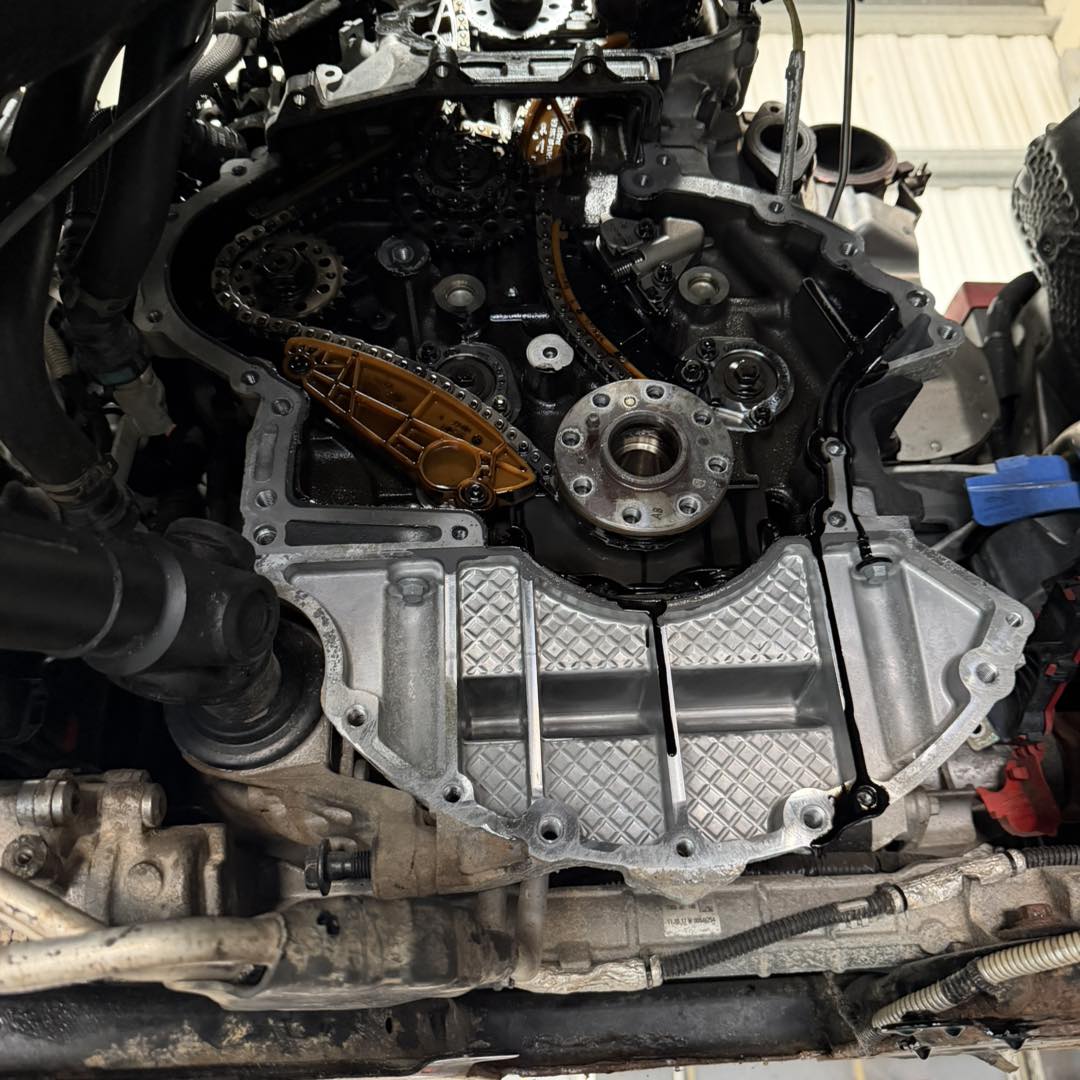
Engine timing components exposed during repair at KITH Cars Garage & Bodyworks, Hackbridge

Short trips around Carshalton Ponds still age the belt

Plenty of cars in Carshalton spend their week crawling along West Street and Wrythe Lane at school times, or edging past Carshalton Ponds and All Saints Church on the narrow A232 through the village. Journeys like that add very few miles, so owners are often surprised when we tell them the cambelt is due. The reason is that belts have a time limit as well as a mileage limit, and the rubber keeps ageing whether the car is driven or not.

Short, slow trips also mean more cold starts for every mile covered, and a lot of time spent idling in traffic around the schools and St Helier Hospital. None of that shows on the odometer, but the belt, tensioner and idler bearings are still turning. On engines where the belt drives the water pump, a pump that is starting to weep can also go unnoticed for longer when the car never gets properly warm.

When a Carshalton car comes in, we start with the service history and the engine code, then look up the current interval from the manufacturer's schedule, including any later revisions. If the car was bought from a neighbour or a dealer without receipts, we recommend treating the belt as due. The job itself covers the belt, tensioner and idlers, the water pump where it is belt-driven, and a check of the timing before the engine is started. If the car has been sitting for long spells, we also look for cracking on the back of the old belt, which tells you how the rubber has aged.

Families around Wrythe Green and up the hill in Carshalton Beeches often ask whether they can manage without the car for a day. The drive to us is only 1.2 miles, so many people drop the car off after the morning school run and collect it later. Collection and delivery can be arranged if that suits better, and the work is covered by a 3-month workmanship warranty.

Cambelt Replacement: what’s involved

The cambelt is a toothed rubber belt that keeps the crankshaft and camshafts turning in exact step, so the valves open and close at the right moment relative to the pistons. On many engines the same belt also drives the water pump. The belt is guided by a tensioner and idler pulleys, which have bearings that wear at the same rate as the belt.

Most modern engines are interference designs, meaning the valves and pistons share the same space at different times. If the belt snaps or jumps a tooth, the pistons hit the open valves. The usual result is bent valves and often damaged pistons or a damaged cylinder head, and sometimes the engine is not worth repairing. A cambelt rarely gives any warning before it fails, which is why it is replaced by age and mileage rather than when it goes wrong.

From £475Written quote first
3–6 hoursTypical time in the workshop
3 monthsWorkmanship warranty
4.9★193 Google reviews

Signs your cambelt needs attention

Due or overdue by age or mileage

The most important sign is on paper. If the interval has passed on either time or miles, the belt is due, even if the car runs perfectly.

No record of a change

If you have bought a used car with no invoice showing a cambelt change, assume it has not been done and have it replaced.

Oil or coolant on the belt

Leaking camshaft or crankshaft seals, or a weeping water pump, soften the rubber and can make the belt slip or strip teeth. The leak needs fixing at the same time.

Whining, ticking or rumbling from the belt end

A worn tensioner or idler bearing can whine or rumble from the timing end of the engine. Bearing failure can take the belt with it.

Coolant loss near the water pump

On engines with a belt-driven water pump, a crusty coolant trail or damp patch below the pump means its seal is failing.

Cracks, glazing or fraying

Visible cracking on the back of the belt, shiny glazed teeth or frayed edges seen through an inspection cover mean it is overdue.

Engine will not start after a noise

If the engine turns over faster than normal but will not fire after a slap or clatter, the belt may have broken. Do not keep cranking; have it recovered.

When should a cambelt be changed?

Every manufacturer sets its own interval in both miles and years, and the belt must be changed at whichever comes first. The rubber ages even when the car sits still, so a low-mileage car can be due on time alone. Intervals vary widely between engines, and some have been revised by the manufacturer since the car was new. We look up the current figure for your exact engine code. If your car's history is unknown, the safest approach is to change it now and start the clock again.

  • Typical intervals: 40,000–100,000+ miles or 4–10 years, whichever comes first, depending on engine
  • Change on age alone if the car does low mileage
  • Change straight away if there is no proof it has been done on a used car
  • Replace the water pump at the same time if it is driven by the belt
  • Change early if the belt has been contaminated by oil or coolant

How we replace a cambelt

  1. Confirm the interval and quoteWe check your engine code, the current manufacturer interval and your service history, then give you a written quote covering the belt, tensioner, idlers and water pump where applicable.
  2. Lock the engine timingThe engine is set to its timing position and locked with the correct engine-specific timing tools so the camshafts and crankshaft cannot move.
  3. Strip to the beltEngine covers, the auxiliary drive belt and pulleys are removed, and on many transverse engines the engine mount is removed with the engine supported.
  4. Replace belt, tensioner and idlersThe old belt, tensioner and idler pulleys come off. We check the camshaft and crankshaft seals for leaks before fitting the new parts.
  5. Replace the water pumpWhere the pump is belt-driven, it is replaced with a new gasket or seal while everything is accessible.
  6. Tension and verify timingThe new belt is tensioned to specification, the locking tools removed and the engine turned by hand through two full revolutions to confirm the timing marks line up again.
  7. Refill and bleed coolantThe cooling system is refilled with the correct coolant and bled of air.
  8. Road test and recordWe run the engine to temperature, check for leaks and noise, road test, then record the date and mileage on your invoice and a label in the engine bay.

Cambelt parts we fit

We fit complete OE or OE-equivalent timing kits from suppliers such as Gates, Dayco, ContiTech, INA and SKF, who make belts and tensioners for car manufacturers. A kit includes the belt, tensioner and idler pulleys so every wearing part starts fresh. Where the water pump is driven by the belt we fit a new pump from the same quality of supplier, and refill with coolant of the correct type for your engine.

  • Timing belt
  • Tensioner and idler pulleys
  • Water pump and seal where belt-driven
  • Coolant to manufacturer specification
  • Camshaft or crankshaft seals if they are leaking

How long it takes

3–6 hours

Most engines take 3–5 hours. Some V6 and tightly packaged engines take longer, so we often ask you to drop the car off in the morning and collect it the same afternoon or the next day.

What’s included

  • Confirmation of the correct interval for your engine
  • Belt, tensioner and idler pulleys
  • Water pump replacement where belt-driven
  • Engine-specific timing tools and timing verification
  • Coolant refill and bleed, leak check and road test
  • Invoice and engine bay label showing date and mileage

From Carshalton to our Hackbridge workshop

From Carshalton village, head north on West Street (B278) past Carshalton station, briefly onto Wrythe Lane, then Wrythe Green Road onto Nightingale Road and Hackbridge Road (both B277). At Hackbridge, turn onto London Road (A237) for Soho Mills, near Hackbridge station.

From the village, head up West Street past Carshalton station, then via Wrythe Green Road and Hackbridge Road to London Road in Hackbridge, about 5 minutes in all. We can collect the car from home if you would rather not drive it in.

Directions from Carshalton

About Carshalton

Carshalton is a leafy suburb about a mile east of Sutton, centred on a picturesque village around Carshalton Ponds, a source of the River Wandle. The old village has conservation areas, listed buildings and a village feel, while Carshalton Beeches and Carshalton on the Hill to the south are quieter streets of interwar and Edwardian family homes. To the north, The Wrythe and the Carshalton part of the St Helier estate are more densely built. Around the ponds the roads are narrow and busy, but most of the area is quiet residential driving.

Places nearby: Carshalton Ponds, All Saints Church, Honeywood Museum, Grove Park, Carshalton Water Tower, Carshalton House

Postcodes: SM5 · London Borough of Sutton

More about KITH for Carshalton drivers

Cambelt Replacement in Carshalton: your questions answered

I only use the car for school runs around Carshalton. Could the cambelt really be due?

Yes. Every cambelt has an age limit in years as well as a mileage limit, and it must be changed at whichever comes first. A car doing short local trips will usually hit the age limit first. We will check your engine's figure and your records.

Can I drop the car off after the school run and pick it up later the same day?

In most cases, yes. A cambelt change typically takes 3–6 hours depending on the engine, so a morning drop-off usually means an afternoon or early evening collection. We will confirm the timing when we quote.

What if the cambelt breaks while I'm driving up Park Hill?

The engine will stop and will not restart, so pull over safely and do not keep trying to crank it. Turning it over repeatedly can add to any valve damage. Call us and we can arrange to recover the car to the workshop and assess it.

How do I know if my car has a cambelt or a timing chain?

It depends on the engine, and some makers use both across their range. Tell us your registration and we will confirm what your engine has and what its interval is.

Why replace the water pump if it is not leaking?

When the pump is driven by the cambelt, a pump bearing or seal failure can wreck the new belt. Most of the labour is shared, so replacing the pump at the same time costs far less than doing it separately later.

My car has a wet belt. Is that different?

Some engines, including Ford's 1.0 EcoBoost and the 1.2 PureTech used by Peugeot, Citroën and Vauxhall, run the belt inside the engine in oil. These belts can degrade early if the wrong oil is used or changes are missed, and debris can block the oil pick-up. Manufacturers have revised some of these intervals, so we check the current guidance and quote these jobs individually.

Does a cambelt change affect my service history?

Yes, positively. It is one of the first things buyers and dealers check. We record the date and mileage on your invoice so you have proof it has been done.

Can I just replace the belt and not the tensioner?

We do not recommend it. The tensioner and idlers have bearings that have done the same miles as the belt, and a pulley failure can destroy the new belt. Belt manufacturers supply kits for this reason.

Price your cambelt replacement now

Enter your reg and we’ll look up your car and price the job from our own labour rates and the book time for your model. Then book it in with a fixed written quote before any work starts.

  • Free, about 30 seconds, no sign-up
  • Parts, labour and VAT included
  • 3-month workmanship warranty
  • Collection from Carshalton can be arranged
“It’s rare to find a garage you can truly trust. Fair price, brilliant customer service.”Thinushan K. · ★★★★★ Google

Prefer to talk? Call 020 4629 9469 or WhatsApp us.

Loading instant quote…
Chat on WhatsApp